• EAST, 1933 und 1948

    “Today, the enemy does not stand before us separated by any trenches or barbed wire. Since the war, the enemy has infiltrated the people. A foreign spirit and foreign ideas have taken root among our people and have wrought great harm. […] We wish to renew the spirit of our homeland under the symbol under which, two hundred and fifty years ago, the Christian West was liberated from Asian influence: the simple Christian cross.” (Die Neue Zeitung 15.05.1933: 2, GERMAN)

    Chancellor Engelbert Dollfuß, speech delivered during the “Heiamtschutz Turkish Liberation Celebration” (14 May 1933), Schönbrunn Palace

    Source [GERMAN]: https://www.oeaw.ac.at/tuerkengedaechtnis/feiern/250-jaehriges-jubilaeum-1933/tuerkenbefreiungsfeier-des-heimatschutzes

    On 12 September 1948, Federal Chancellor Leopold Figl spoke on Kahlenberg to commemorate the relief of Vienna in 1683. Austria had resolved at that time “to withstand the onslaught on Europe not only in its own interest, but also driven by the conviction that it was necessary to save the West from perishing in the waves of a cruel power alien to its very nature”. (Das Kleine Volksblatt, 14 September 1948)

    In response to this speech, a decidedly critical commentary was published in the Viennese daily newspaper “Der Abend” on 13 September 1948, which posed the central question right at the outset: “Who are the Turks of today?” Of all the parallels drawn between past and present, Chancellor Leopold Figl had, “with an infallible sense of the rhetorical value of banality”, drawn the “cheapest comparison”, the commentary continued. “Vienna as the outpost of Western civilisation threatened by the East. Who hasn’t heard that before?”

    Compared to Leopold Figl, who continued to emphasise Austria’s victimhood in his speech, the other speakers found clearer words. For example, Legation Councillor Tykocinsky of the Polish Legation in Austria remarked: “In recent years, Western civilisation has been threatened by none other than German National Socialism, and the liberating armies that saved Vienna in 1945 came from the East.” (Der Abend, 13 September 1948: 2) Mayor Körner did recall the solidarity of the Viennese, but at the same time emphasised that the “famous ‘European community of destiny’ against the Turkish threat was a historical lie”, “since France and Prussia were not present when King Sobieski appeared before the walls of Vienna with his mixed relief army” (ibid.). The historian Otto Forst-Battaglia took his argument a step further, arguing that “the West of that time, embodied in the France of the Sun King”, was not only absent but “secretly supported” the Ottomans (ibid.).

    Source [GERMAN]: https://www.oeaw.ac.at/tuerkengedaechtnis/denkmaeler/ort/leopoldsberg-heimkehrer-gedaechtnismal
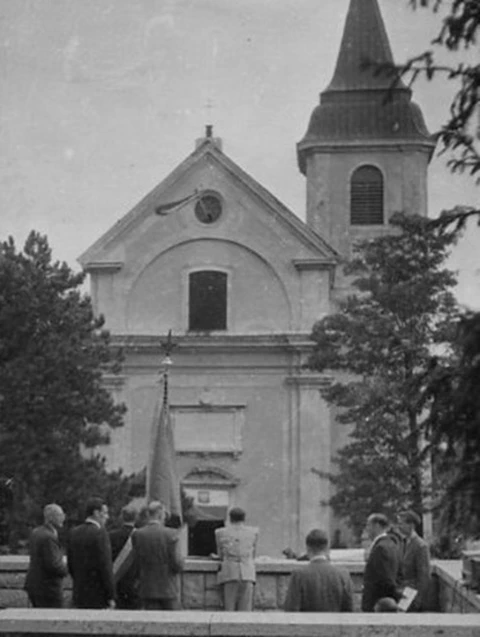
    Josefskirche
    Kahlenberger Kirche
  • Tuesday, June 9th 2026, Märzpark and Stadthalle

  • Lueger

    ‘Here in our fatherland, Austria, the situation is such that the Jews have gained an influence that goes far beyond their numbers and significance. (Interjection: Quite right!) In Vienna, the poor craftsman has to go begging on Saturday afternoons to sell the work of his hands; he has to beg at the Jewish furniture dealer’s. (Quite right!) Here, influence over the masses lies in the hands of the Jews; the majority of the press is in their hands; the vast majority of capital, and especially big capital, is in Jewish hands; and the Jews are practising a form of terrorism here that could not be more appalling. Our concern in Austria is, above all, the liberation of the Christian people from the domination of Judaism.’

    From a speech by Mayor Karl Lueger at the meeting of the Christian-Social Workers’ Association held in Vienna on 20 July 1899, in: Weiningers Nacht, Europa-Verlag, Vienna 1989, https://www.habsburger.net/de/rede-karl-luegers-vom-20juli-1899 [GERMAN]

    Lueger
  • Friday, June 26th 2026, 4:00 to 6:00pm, Stubentor, Lueger-Statue

    The CON STRUCTION SITE ANTISEMITSM on tour at the Stubentor, near the newly erected—and tilted—Lueger statue. We’re working with school classes and will be open to the public on June 26 from 4:00 p.m. to 6:00 p.m.

    “He alone also dispels the despondency of the Viennese. Until now, they have been scolded. He praises them. People have demanded respect from them. He frees them from all respect. People have told them that only the educated should govern. He shows how poorly the educated understand the art of governing. He—an educated man, a doctor, a lawyer—tore the doctors to shreds, tore the lawyers apart, insulted the professors, and mocked science; he exposes everything that intimidates and constricts the masses; he hurls it aside, tramples on it with a laugh, and the cobblers, the tailors, the coachmen, the greengrocers, the street vendors cheer [...]. He affirms the Viennese lower class [...] in their distrust of education, in their wine-induced stupor, in their love of popular songs, in their clinging to the old-fashioned, in their exuberant self-satisfaction; and they go wild, they go wild with delight when he speaks to them.” (From: *Lueger*. Felix Salten, essay published in 1910, available here: https://licra.contextxxi.org/lueger.html)

    More about the event on June 26

  • “Did you ask a good question today?”

    Physicist and Nobel laureate Isaac S. Rabi recalls that his mother always greeted him with this question when he came home from school as a child. Historian Yosef Hayim Yerushalmi cites this praise of an inquiring attitude in the preface to his lecture “Exile and Displacement in Jewish History” (1992). He cites it as a model for his own tentative approach to the “dialectical tension between exile and domicile,” through which he seeks to paint a more nuanced picture of exile as a “fundamental condition of Jewish existence.” This is also intended to make room for feelings of rootedness, of “being at home” in the cities and countries of the Diaspora. “For only when we know how deeply attached Jews were to the places where they lived can we appreciate how bitter the experience of expulsion must have been.” (p. 29) And on the other hand, to recognize that a “doctrine of contempt for Jews” was developed precisely under conditions of successful coexistence among religious groups, cultural assimilation, and the permeability of social barriers, in order to counteract a softening of their status as “tolerated strangers.”

    (See: Yosef Hayim Yerushalmi, Ein Feld in Anatot. Versuche über jüdische Geschichte, Berlin 1993, S. 21-38)

  • CON STRUCTION SITE ANTISEMITISM

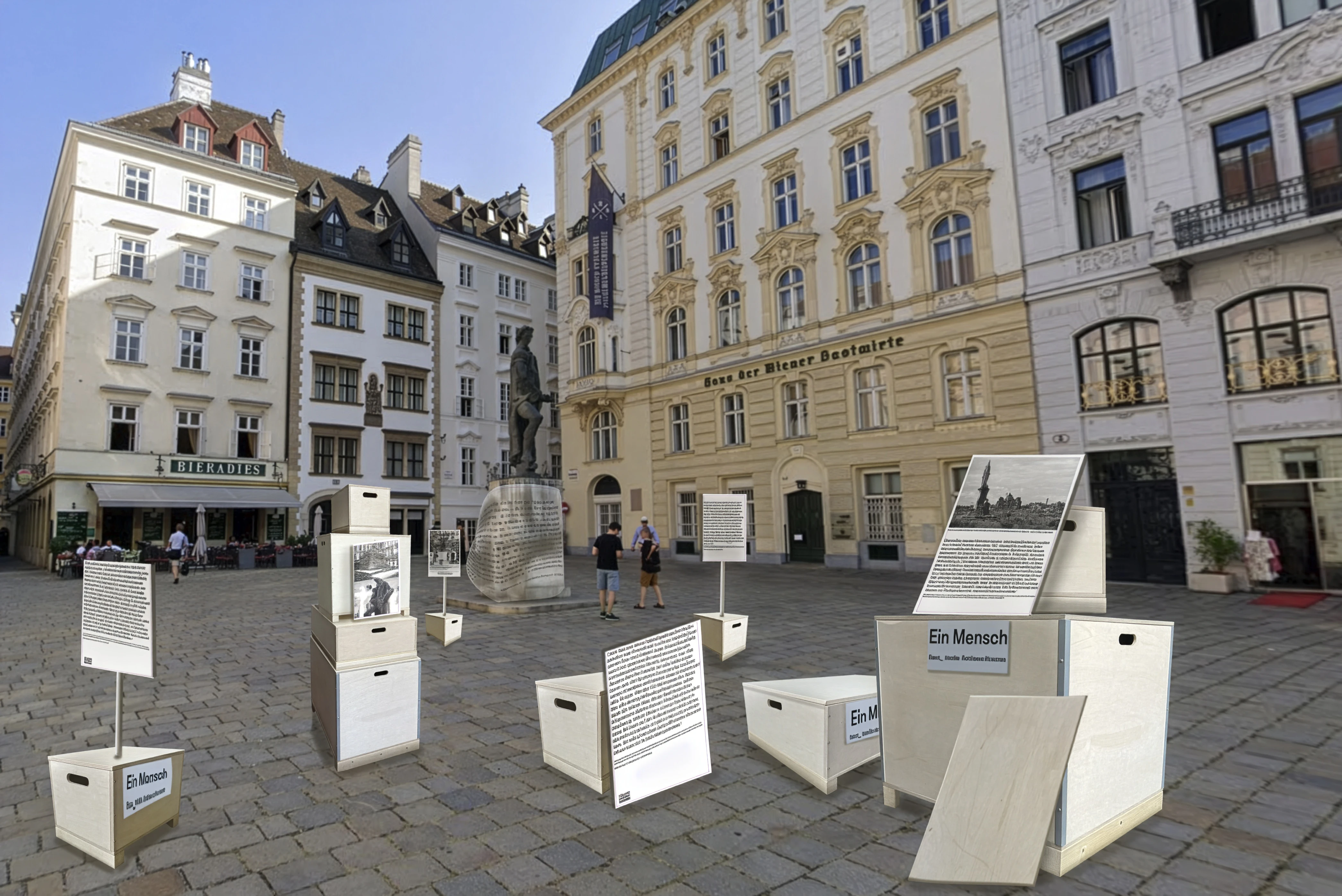
    The project CON STRUCTION SITE ANTISEMITISM by the praxisgemeinschaft hubin/schneider/schmutz develops, implements and researches an educational tool addressing the antisemitism deeply rooted in Viennese society and its links to the tradition of anti-Muslim discrimination, anti-Slavism, racism, and the marginalisation and devaluation of people with migration backgrounds. It consists of mobile boxes that can be stacked on top of one another to serve as seating, appear at various locations across Vienna, and contain materials developed through a participatory urban research process.

    Current dates can be found here...

    By working with selected historical sources, areas of tension that converge at these specific locations are brought to light. As part of a performative contextualisation, the participants’ perceptions, perspectives and contradictions are also incorporated into the process.

    More about the project here ...

    Project development & management: Andrea Hubin (art historian and art educator), Wolfgang Schmutz (educational consultant, including USHMM, Claims Conference, University of Redlands, Salzburg), Karin Schneider (Head of Art Education, Lentos Art Museum/Nordico City Museum, Linz)

    Partners: Wien Museum; Department of History Education, University of Vienna; Institute for Migration Pedagogy

    Artistic design: Anna Pech & Moritz Matschke (University of Art and Design Linz)

    Contributors to development & reflection: Anne Pritchard-Smith (History teacher at AHS Vienna and Department of German Didactics, University of Vienna), Nora Hasan (Primary school teacher, history education at “March of Remembrance and Hope – Austria”)

    Guest contribution to the Capistran Pulpit box development: Muhammet Ali Baş (artist and cultural mediator, including at the Weltmuseum Wien)

    More about the contributors...

    Funded by the City of Vienna Culture (MA 7), in the framework of the call "Contemporary forms of remembrance/Zeitgemäße Formen des Erinnerns“ (2024)

    BAU STELLE ANTISEMITISMUS Rendering
  • From: Ruth Beckermann: ”Unzugehörig. Österreicher und Juden nach 1945” Löcker-Verlag, Wien, 1989. S. 12-15 [GERMAN]

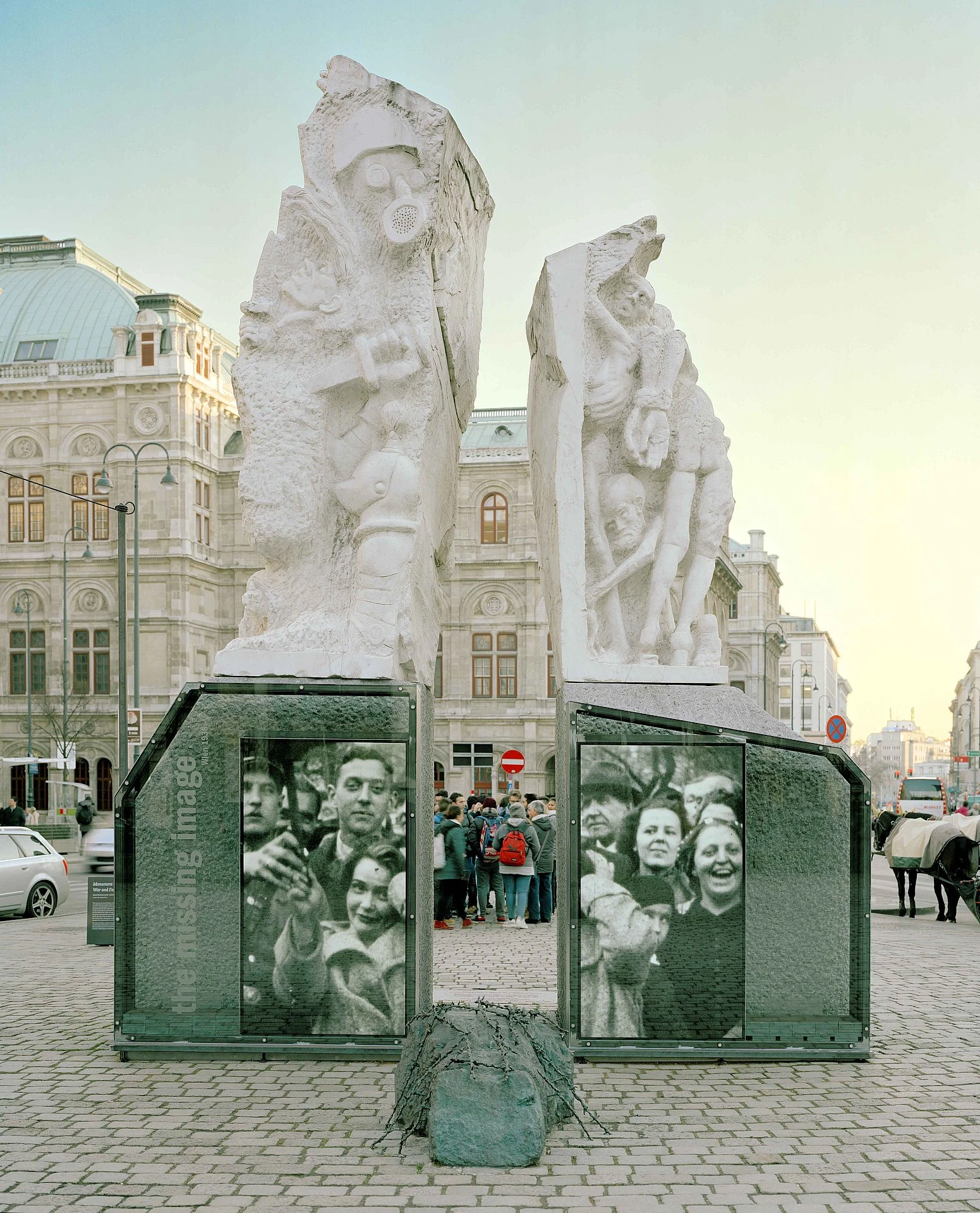
    "There are a great many photographs from Vienna in March 1938. Grinning people watching Jews being dragged along the ground. I have often wondered why, in all the years since the end of the war, no one has thought to set out in search of these people, photograph in hand. To hold their grins up to them.

    The city in which I was, strangely enough, born has erected a monument to its own self-righteousness. The ‘Memorial against Fascism and War’ on Albertinaplatz consists of four sections bearing names, which are intended to be viewed chronologically and convey the message of the Gate of Violence: We were victims. Victims of the Nazis and victims of the war. The Kneeling Jew: This is what THE NAZIS (emphasis in the text) did to the Jews. The third section depicts Orpheus on his way to the underworld, where he apparently encounters war and concentration camps, yet charms the hellhound Cerberus and Hades himself with his lyre. Hades returns Eurydice to him on the sole condition that Orpheus must not look back until they have reached the sunlight. Orpheus, however, turned to look at his wife – and lost her forever. Those who look back instead of fixing their gaze on the future are punished. All’s well that ends well. Orpheus returns to the Second Republic. The fourth part of the memorial is the Stone of the Republic, the meaning given to the meaningless, the optimistic ending. The mass murder did have a purpose after all, for the Second Republic emerged fresh and free. Carved into the stone is the Declaration of Independence proclaimed on 27 April, the fossilised historical lie of Austria as Adolf Hitler’s first victim, who ‘led the Austrian people, rendered powerless and will-less, into a senseless and hopeless war of conquest that no Austrian ever wanted’.

    That is not why the Jews perished. Their deaths had absolutely no meaning. Neither the founding of a Second Republic of Austria nor the establishment of a Jewish state can serve as a justification for the deaths in the gas chambers of Auschwitz or Mauthausen, which were utterly meaningless to the victims.

    The memorial against fascism and war is also intended to signify an ahistorical rejection of war per se, pandering to the peace movement. As if it were not precisely the opponents and victims of Nazism who had pinned all their hopes on the front line drawing nearer and the liberation of the camps. As if singing and praying apostles of peace had liberated Auschwitz and Mauthausen and, ultimately, Vienna as well. Alfred Hrdlicka’s memorial caters to the views of all those who unhesitatingly set one group of victims against another: the war victims against the victims of National Socialist ideology – Jews, Gypsies, homosexuals, the mentally ill. And who refuse to acknowledge that without the enthusiasm for Nazism there would have been no German war of conquest, that without Coventry there would have been no Dresden and no deaths at the Philipphof on Albertinaplatz."

    The Missing Image
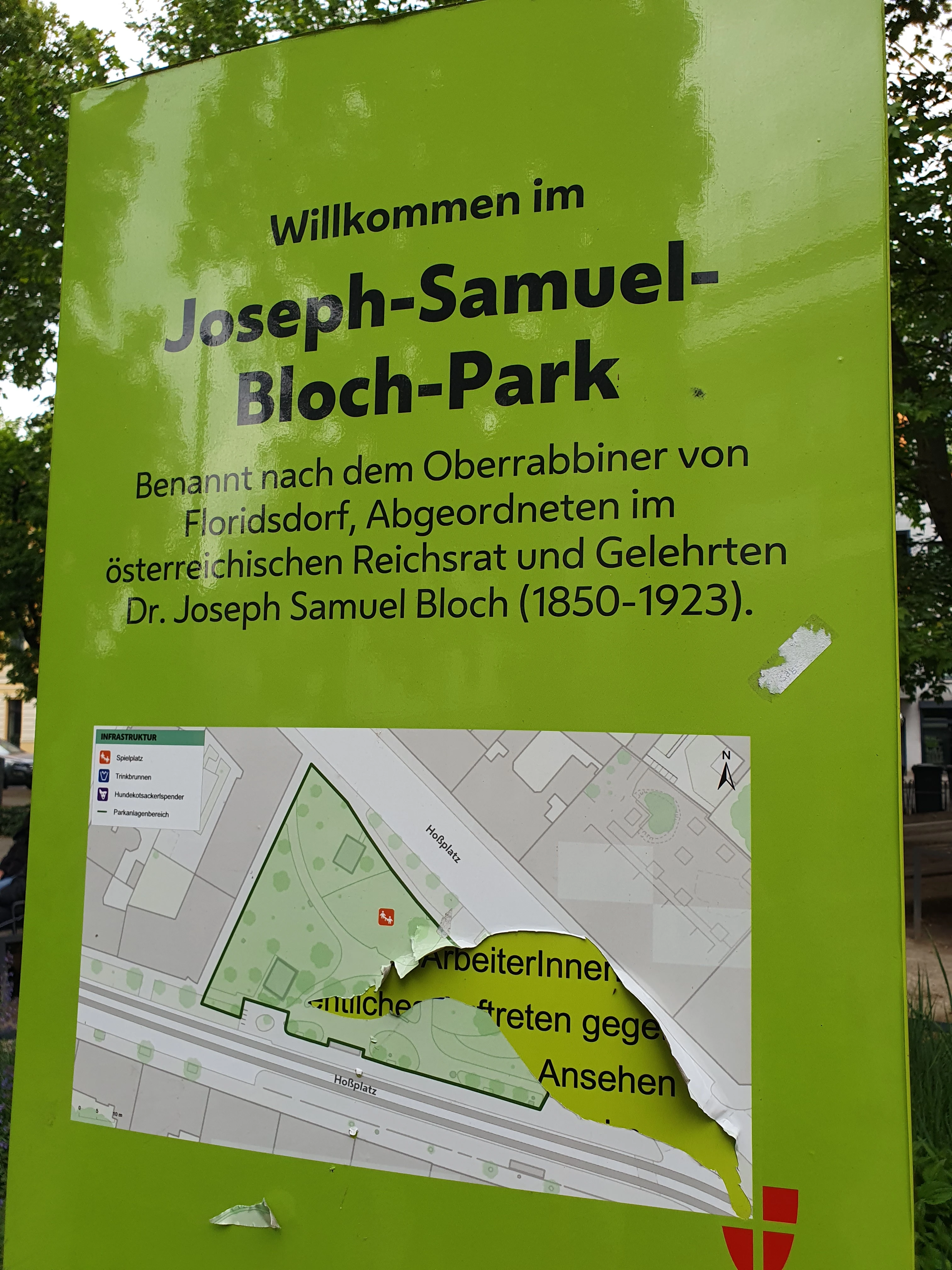
  • Welcome to the Joseph Samuel Bloch Park!

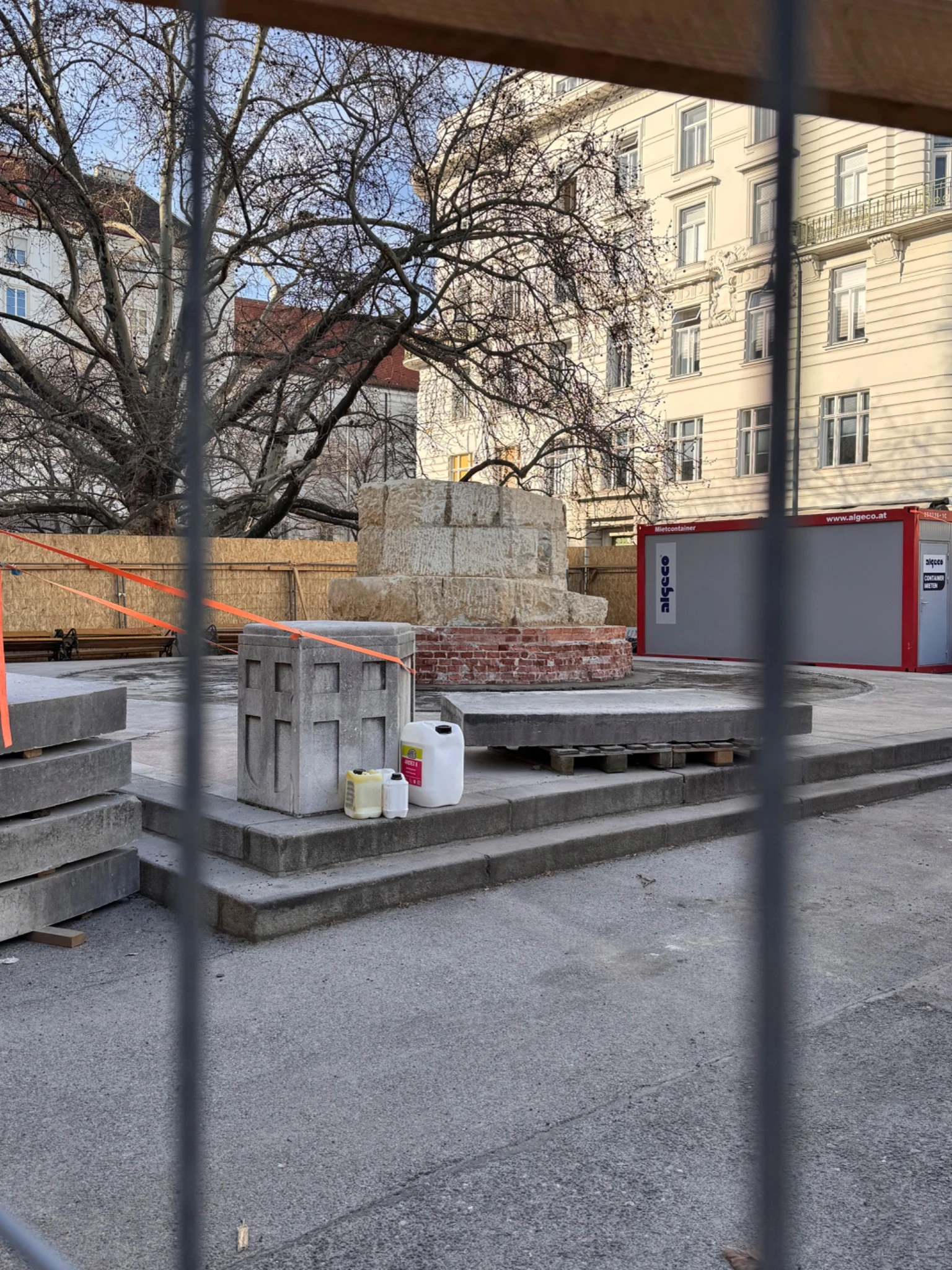
    Willkommen im Joseph-Samuel-Bloch-Park! Zustand der Hinweistafel am 14.05.2026.
  • ‘For us, knocking on the door means something completely different from what it means to you.’

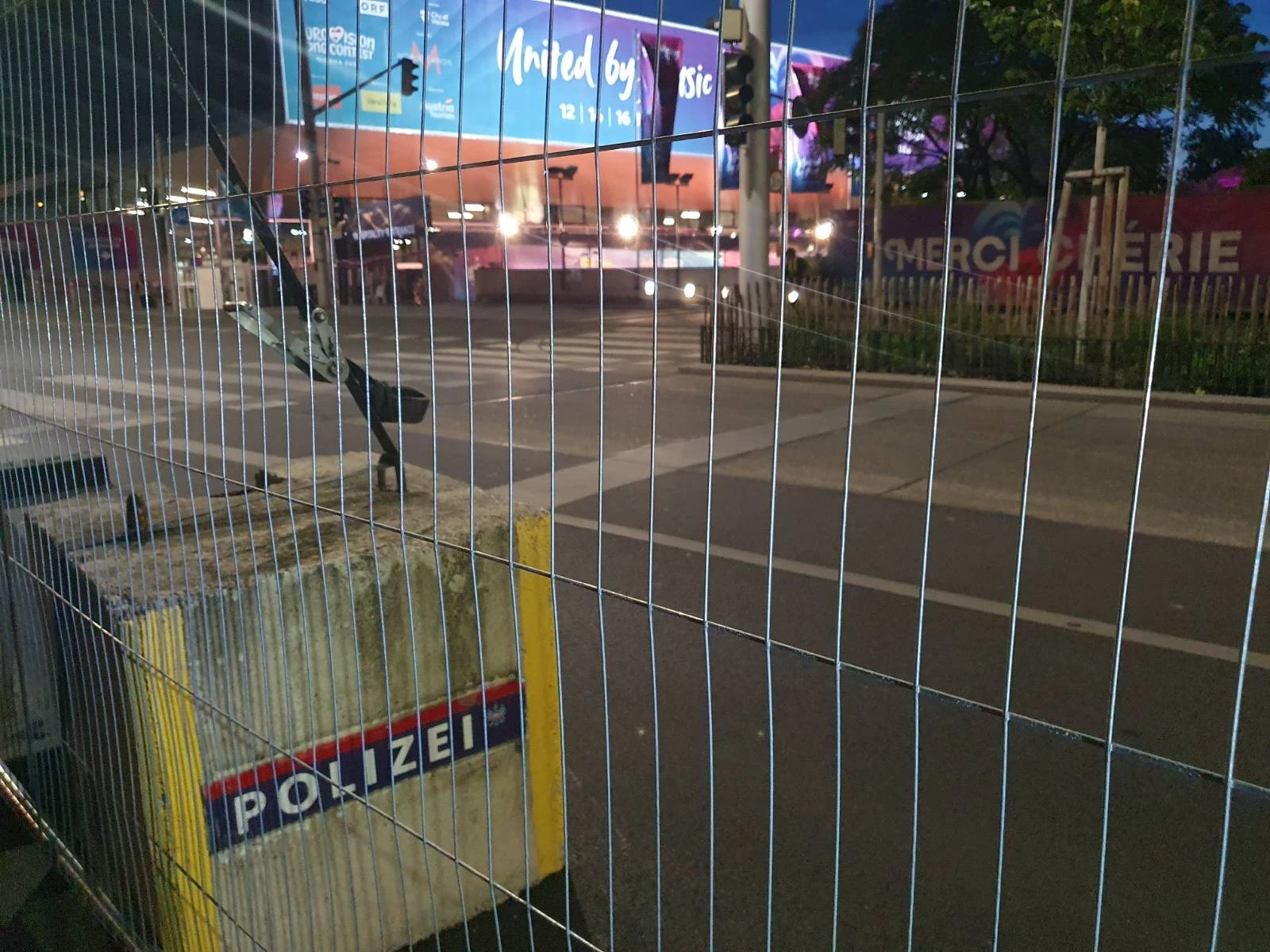
  • Stadthalle

    THE WIENER STADTHALLE
    PLANNED IN TIMES OF DEPRIVATION AND HARSH WAR AS A TESTAMENT TO THE
    UNBROKEN STRENGTH OF THE WORKING PEOPLE OF VIENNA
    BUILT IN THE EARLY DAYS OF OUR HOMELAND’S FREEDOM AS A PROMISE
    FOR A BETTER FUTURE
    DEDICATED TO THE YOUTH OF VIENNA, TO THE PEOPLE OF THE REPUBLIC OF AUSTRIA
    AND TO ALL PEOPLE OF GOOD WILL AROUND THE WORLD AS A HOMESTEAD
    FOR THE PEACEFUL COMPETITION OF THE ARTS AND SPORT

    [GERMAN] DIE WIENER STADTHALLE

    GEPLANT NACH NOT UND HARTER KRIEGSZEIT ALS ZEUGNIS DER
    UNGEBROCHENEN KRAFT DES ARBEITENDEN VOLKES VON WIEN 
    GEBAUT IN DER JUNGEN FREIHEIT DER HEIMAT ALS VERSPRECHEN 
    FÜR EINE SCHÖNERE ZUKUNFT
    GEWIDMET DER JUGEND WIENS DEM VOLK DER REPUBLIK ÖSTERREICH 
    UND ALLEN GUTGESINNTEN DER WELT ALS HEIMSTÄTTE 
    DES FRIEDLICHEN WETTSTREITES DER KÜNSTE UND DES SPORTES

    https://bm15blog.wordpress.com/2019/09/02/wiener-stadthalle-groesstes-veranstaltungszentrum-osterreichs/ 

    “at a time [...] when nations and peoples, divided by language and faith, embraced one another in brotherhood, their hearts filled with joy, and drew a veil over the dark past”

    [GERMAN] https://sammlung.jmw.at/objekt/004725-%2339nur-keine-juden-emanzipation-oder-der-geputzte-hans-j%C3%B6rgl%2339/


    "It`s very trendy to hate Israel, but I have always said ‘fashion for the fragile, style for the brave."

    Boy George on X, April 2026: On the occasion of his upcoming appearance at the Eurovision Song Contest at the Wiener Stadthalle and the ensuing debate over Israel’s exclusion from the contest.

    "When EBU staff in the media centre whisper that we should be grateful to Austria in 2025 and Bulgaria in 2026 because their victories each prevented an Israeli win, a simple counter-question arises: if a country is allowed to enter the competition, then it must also be allowed to win. Anything else would cause lasting damage to the credibility of the contest."

    Marco Schreuder, 17 May 2026, Der Standard [GERMAN]: https://www.derstandard.at/story/3000000320957/dara-gewinnt-fuer-bulgarien-den-esc-und-die-krise-wandert-an-den-balkan


    Stadthalle Wien - ESC 2026
  • EAST, 1883

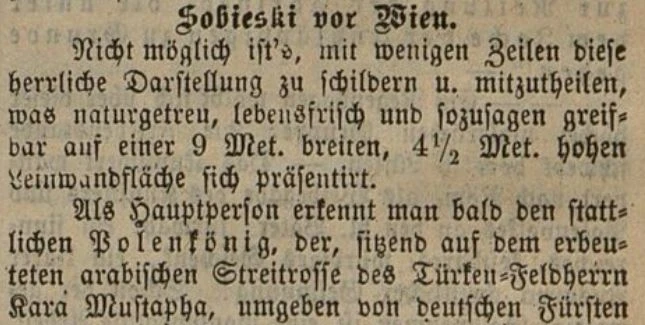
    ‘Even today, the Poles – those conservative, devout and imperial-loyal members of parliament from there – come to our aid against the many invaders from the East, against ...’

    from: Nachklänge zum Türkenrummel „1883“, in: St. Pöltner Bote, 25.10.1883, S. 2. LINK

    Sobieski vor Wien
  • Saturday, May 30th 2026, Floridsdorf, Symposium on Migration Education

    As part of the symposium, we invite you to join us in exploring selected sites of remembrance in the vicinity of the venue, whilst testing methodological approaches that we have developed for the perception of public space and the handling of historical sources.

    https://migrationspädagogik.at/fachtagung-migrationspaedagogik-29-30-mai-2026/